Nathalie Baye’s Bold Confession: At 76, The French Icon Reveals Her Secret Romance with a Much Younger Man, Defying the Odds of Age and Fame
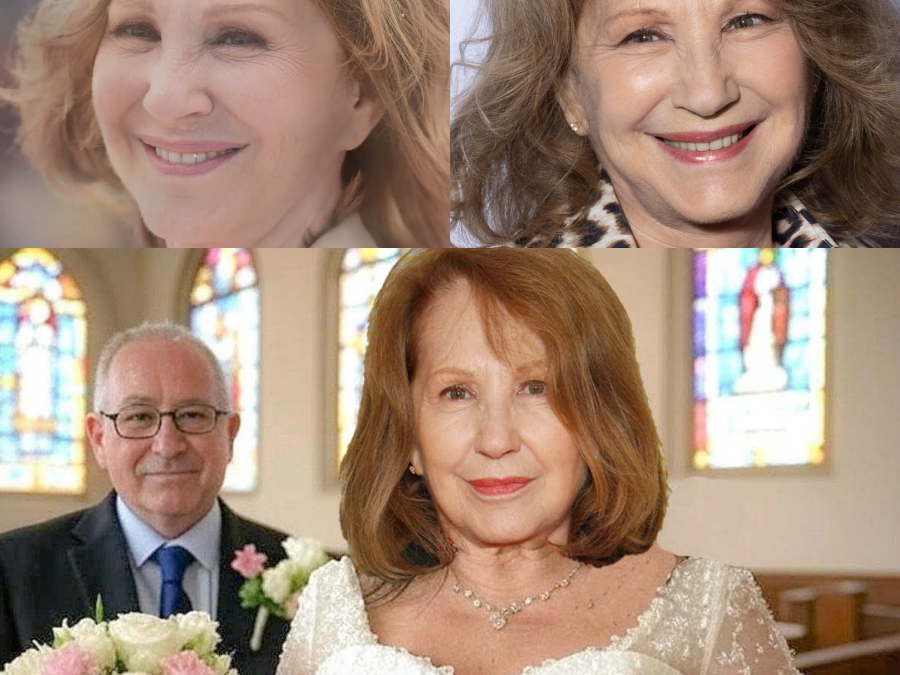
At 76 years old, when many assumed she would retreat into the gilded, quiet solitude often reserved for the grand dames of French cinema, Nathalie Baye has taken everyone by surprise. In a breathtaking and deeply emotional whisper, the iconic actress has confirmed what rumors had been insisting for some time: Yes, she is in love, and yes, she is getting married. But her chosen partner is not a lifelong companion of her own generation. She is saying “I do” to Théo, a man decades her junior, whom she has loved in absolute secrecy for the past three years.
This stunning revelation is more than just an intimate confession; it is a profoundly symbolic act that completely shatters clichés and redefines the image of a free, independent woman. It is not merely a love story defying the passage of time; it is a gentle yet powerful slap in the face to societal norms and to anyone who still believes that, past a certain age, the heart’s desires should remain silent.
For over half a century, Nathalie Baye has embodied elegance, mystery, and the quiet strength of French cinema. Yet, behind the glare of the spotlights, very few have truly known the real rhythm of her heart. For three years, it has beaten for Théo. We know very little about him, and this is by deliberate design. He prefers the shadows to the limelight, a choice that has paradoxically made their relationship even more fascinating to media observers. He is described as discreet with a sober charisma; she is radiant, carrying the timeless aura of a star. On the surface, they seem completely opposite. But in their three years of silent love, a visceral, deep, and almost mystical bond has been forged. It is a complicity built away from prying eyes, nourished by mutual respect, admiration, and a love utterly devoid of artifice.
If this relationship managed to escape the relentless gaze of the press for so long, it wasn’t due to a lack of attention. Nathalie Baye is simply a virtuoso of mastered silence. She knows exactly when to speak, and more importantly, how to divert the public’s gaze. It is only now, after three years of extreme prudence and modesty, that she has chosen to open up. She didn’t do so in a highly orchestrated interview, but rather in an almost whispered declaration on the sidelines of a social event. With tears in her eyes and a trembling smile, she made it clear: she no longer wanted to hide. Not at her age, and certainly not with a love this immense.
The entertainment world, often so quick to pass judgment, initially hesitated. A 76-year-old woman marrying a much younger man? It disturbs the status quo; it provokes questions. But very quickly, the critical voices fell silent, overwhelmed by the undeniable truth: this story is deeply sincere and authentic. Through this confession, Nathalie Baye is doing much more than declaring her love; she is committing an act of gentle rebellion. She is making a powerful affirmation that love knows no wrinkles and has no age limit. She doesn’t seek to shock; she simply wants to live and to love. Because to love is also to dare. It is daring to reach out despite the doubts and the judging eyes. It is daring, even when so much of life has already been lived, to offer oneself once again to the uncertain magic of commitment.
In Nathalie Baye’s case, this audacity is even stronger because it exists in a world where the image of the mature woman is often trapped in outdated stereotypes. She breaks these stereotypes with incredible grace, and in doing so, paves the way for countless other women, both famous and anonymous. This marriage, announced in hushed tones but lived with fierce passion, is not an act of revenge against her past. It is a bright, new chapter she is writing alongside Théo—an alliance of the heart, woven day by day in the shadows, and now revealed with a proud, assumed confidence. Perhaps this is what true modernity looks like: refusing to yield to the dictates of age, rejecting the boxes society tries to force us into, and embracing life fully, even when it means swimming against the current.
Those close to the actress speak of a profound transformation. They describe her as more radiant, and significantly more peaceful. It is as if this long-held secret of love had been a weight on her shoulders, and now, she seems liberated. She is far removed from conventions, yet entirely true to herself. She isn’t trying to provoke or convince anyone; she is simply living. In this simplicity, there lies a powerful lesson for us all. By unveiling her relationship with Théo, Nathalie Baye reminds us that the heart has no expiration date, that happiness is not measured in years but in intensity, and that true love requires no justification whatsoever.
This upcoming marriage is not a Hollywood star’s fleeting whim; it is the culmination of a long, sincere, and sometimes painful journey. Three years of loving in the shadows, building a relationship safe from indiscreet eyes, weaving a solid bond far from the flashing cameras. Today, she chooses the light. Not the harsh light of the cinema, but the infinitely more precious light of intimate truth. With this declaration, Nathalie Baye isn’t just writing a new page in her personal life; she is creating a living, palpitating, and inspiring masterpiece—a love story that defies time and judgment, inviting us all to believe, again and always, that the heart remains the youngest of all our organs.
Yet, to truly understand the magnitude of this moment, one must understand the shadows that have defined her past. For over half a century, Nathalie Baye has been an adored actress, an icon of elegance and dramatic intensity whose journey has fascinated generations. But behind the red velvet curtains and the flashes of the red carpets lies a woman marked by deep wounds. Her existence has been one of stark contradictions: the intoxication of the stage versus the silence of her tears; the brilliant light of success versus the dark obscurity of buried sorrows. It is the story of a life lived at two very different speeds—one public and celebrated, the other intimate and intensely painful.
Born on July 6, 1948, into a France still recovering from war, Nathalie grew up in a highly artistic environment. Her father was a painter, her mother a screenwriter. They were two sensitive souls, but their financial situation was constantly fragile. As a child, she stood helplessly by, witnessing her parents’ disputes—muffled but destructive conflicts where love constantly clashed with the daily anxiety of survival. It was in this unstable climate that a visceral need for creation, beauty, and escape was born within her. This need pushed her toward the theater, and eventually the cinema, not merely as a career choice, but as a refuge, a lifeline.
The public soon discovered an actress with a magnetic presence, capable of embodying both fragility and immense strength, profound tenderness and fierce anger. But what the film reels never showed was the story of a deeply wounded woman. Behind every intense look on screen hid a real, long-silenced pain—the pain of a love that broke her forever.
In the late 1950s, a young, strikingly beautiful Nathalie crossed paths with a man who would become one of French cinema’s greatest legends: Alain Delon. Their story began in euphoria, an electric atmosphere where anything seemed possible. But the ideal quickly morphed into a bitter fable. In 1963, Nathalie received a letter that was glacial and implacable; Alain Delon was abruptly ending their relationship. It was a brutal rupture that left a lasting scar.
Her career, however, continued its ascent. A small but decisive role in 1972 caught the eye of the legendary François Truffaut. He saw a raw brilliance in her and decided to polish it, casting her in “Day for Night” (La Nuit américaine) the following year. She played Joëlle, a production assistant, with touching authenticity. The critics raved, and the public fell in love with an actress who didn’t just act; she truly lived her roles.
But behind this sudden spotlight, the reality was far less glamorous. She faced humiliating auditions, fierce competition, and directors whose demands bordered on cruelty. She would often return home in tears, alone in the dark. Years later, she would confess, almost in a whisper, “I asked myself every night if I truly belonged in this profession.” Truffaut became her mentor, a father figure who sometimes pushed her too hard. Their collaboration, while producing masterpieces, was fraught with tension. Truffaut demanded everything, and Nathalie gave everything, sometimes to the point of losing herself.

Through the 1980s, she solidified her status, winning Césars and proving her incredible versatility. But the price of this success grew heavier. She didn’t just play her roles; she immersed herself in them, leaving a piece of herself behind on every set. This intense perfectionism exhausted her deeply. By the 1990s, she began choosing rarer, more demanding roles, leading to speculation about burnout and a desire to withdraw from the public eye.
In a poignant interview in 2003, the mask finally slipped. “Success is a gilded cage,” she confessed. “I lost friends, loves, and sometimes even myself in it.” It was a stark revelation of a woman broken by the relentless pressure to remain at the top.
Today, Nathalie Baye may not be as omnipresent on our screens, but her recent confession proves that she has finally found her most important role yet: living her own truth. Her love for Théo is not just a romantic triumph; it is a profound victory over a lifetime of pressures, expectations, and hidden sorrows. It is the ultimate proof that, after the final cut is called, the most beautiful story is the one we write for ourselves.